Corporate Event Venues Have Changed. Has Yours?
How the Best Corporate Event Venues in Miami Beach Actually Work
The brief has changed. What corporate clients are asking planners to deliver today — and what decision-makers are approving budget for — looks fundamentally different from what passed as a successful event five years ago. The room needs to do more. The environment needs to arrive ready. And the venue is no longer a neutral container waiting to be activated by production.
It is the production.
The planners and corporate clients who understand this are making the venue decision first — before the agenda, before the speaker list, before the catering brief. Because everything downstream is shaped by what the space can and cannot do. Get that decision right and the rest of the planning process has a ceiling high enough to work under. Get it wrong and every dollar spent on talent, programming, and design is working against the room.
What Changed
For years, the standard corporate event model was a logistics exercise. Secure a space large enough to hold the headcount. Bring in the AV team. Set the agenda. Execute.
The space itself was beside the point. Neutral walls, standard lighting, a stage at one end — the goal was to stay out of the way and let the programming carry the event.
That model worked when attendance was the measure of success. It no longer is.
Corporate clients today are measuring events against a different standard. They want to know what shifted in the room. What changed in how attendees understand the brand. What content got generated without prompting. What the conversation was on the way out.
These are outcome questions. And the environment is now part of the answer.
Planners are being asked to design experiences — not coordinate logistics. The distinction matters because it changes the venue conversation entirely. A space that cannot transform is not a neutral asset. It is a ceiling on what is possible.
What the Environment Has to Do Now
An active venue arrives with capability. It does not require capability to be installed.
This is the operational distinction that separates a production-ready space from one that can technically accommodate a production. Rented equipment, temporary rigging, workaround solutions for surfaces that were not designed to be used this way — these are symptoms of a venue that was built for occupancy, not output.
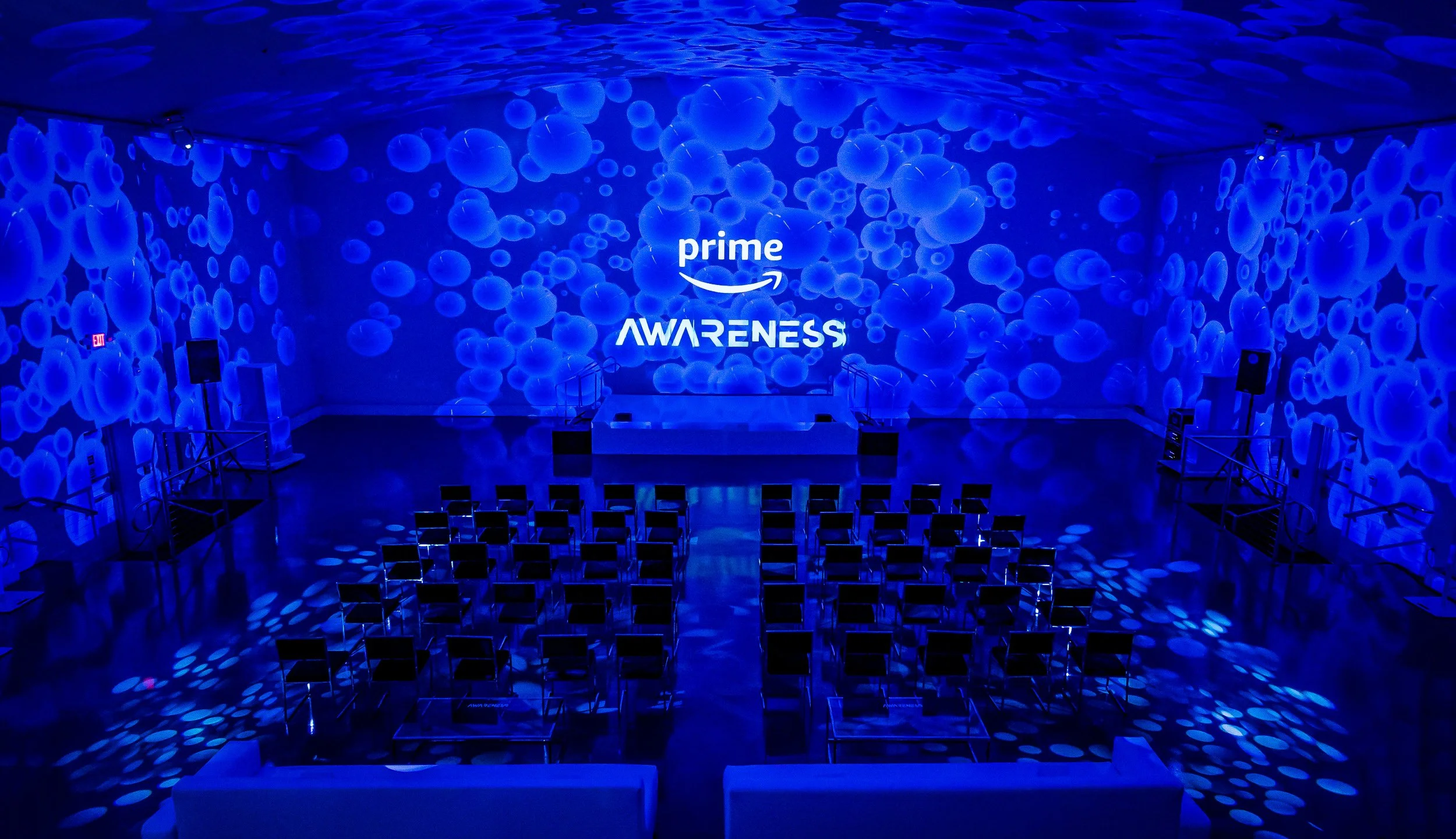
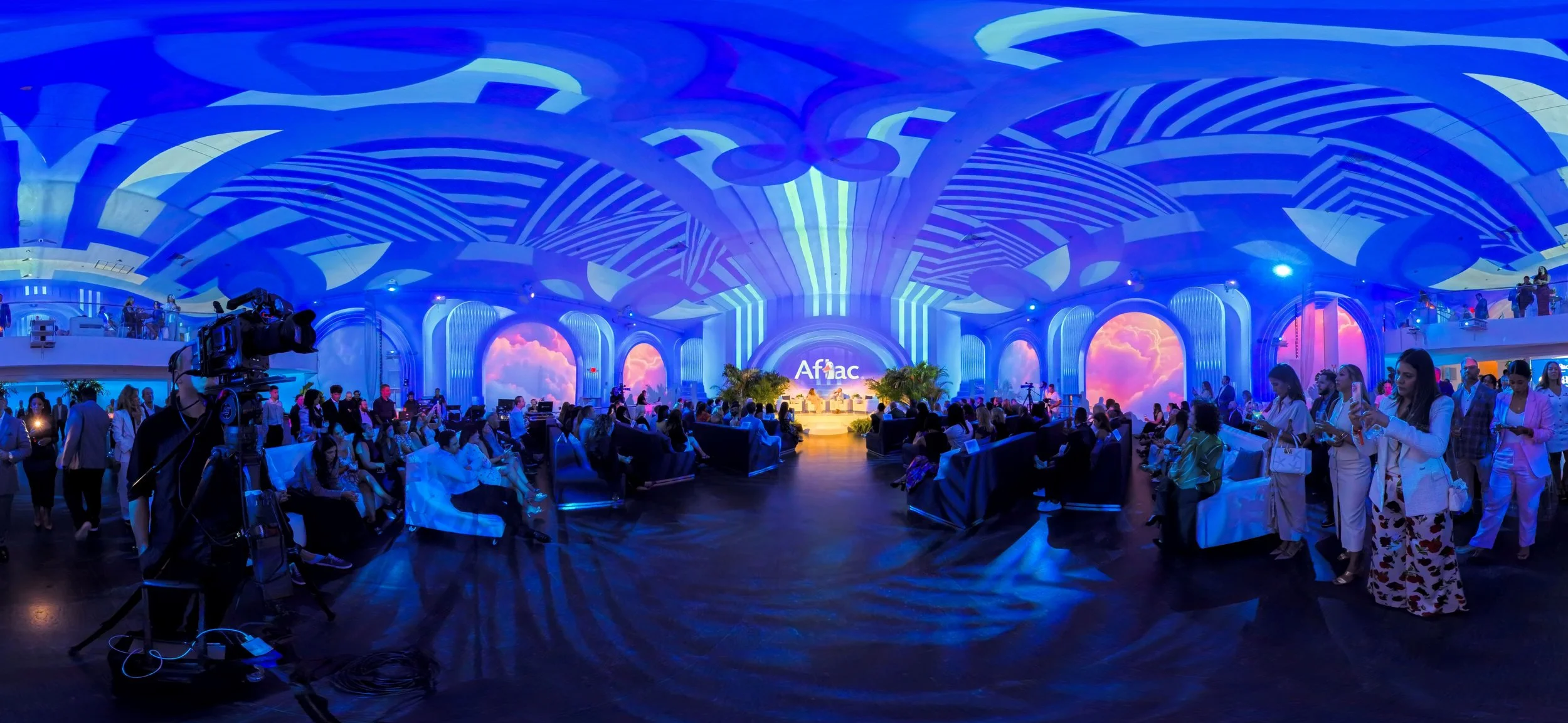
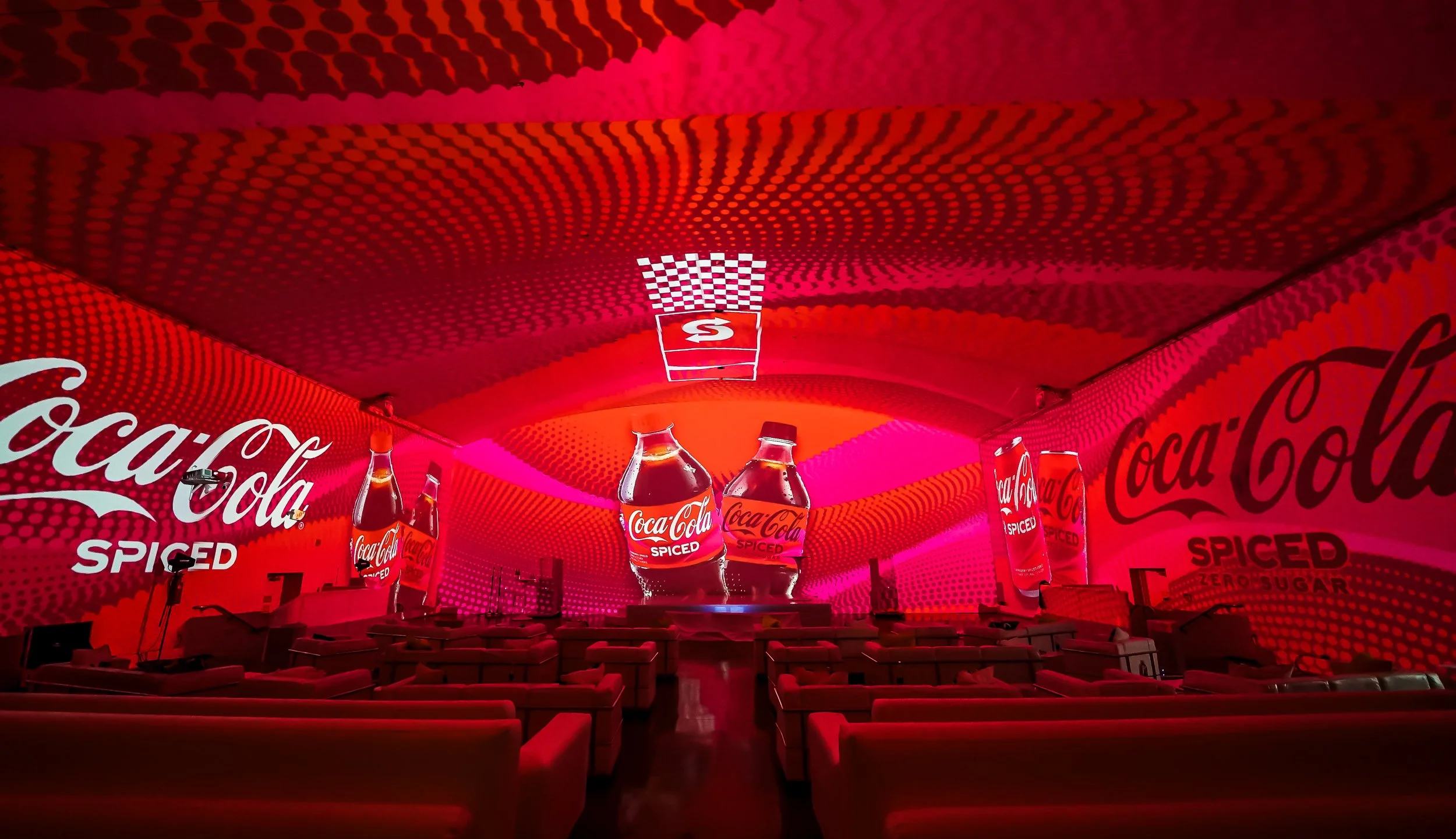
At The Temple House, 360° projection mapping is not a service we bring in. It is built into the architecture of our Art Deco space at 1415 Euclid Avenue in Miami Beach's Historic District. Every surface — walls, ceiling, floor — is a permanent production canvas. The infrastructure is here before the production team arrives. The brief gets executed at a level of precision that a temporary setup cannot match.
What this means in practice: a product launch becomes a world the moment guests walk in. A brand reveal lands with the full weight of an environment designed for that moment. An awards ceremony feels like an event worth attending, not an obligation worth leaving early.
The environment is doing work. That is the standard.
The Exclusivity Standard
High-stakes corporate events require complete operational control. That is incompatible with a venue running two events on the same night.
The standard multi-event venue model — different clients, different floors, shared load-in windows, overlapping vendor schedules — introduces variables that a corporate planner cannot fully manage. A guest wandering into the wrong reception. A production team sharing freight access with a competing brand. Sound bleed from an adjacent ballroom during a keynote.
These are not edge cases. They are predictable outcomes of a model designed for volume, not precision.
We operate one event at a time. Complete exclusivity. Your brand, your guests, your environment — with no operational compromise from another booking in the building. From load-in to load-out, the space is yours.
For planners managing events where the outcome matters, this is not a preference item. It is a requirement. And it is the standard we have built our operation around.
We give more details about it here in our article How to Choose a Destination Event Venue That Actually Delivers on the Vision (2026 Guide).
What to Confirm Before You Book a Corporate Event Space at This Level
Use this checklist in any venue evaluation. These are the questions that surface the gap between a space that can accommodate your event and one that can execute it.
1. Is 360° production infrastructure permanent or rented? Rented equipment means a setup window, a teardown window, and a production team solving problems in real time. Permanent infrastructure means the space was built for this — and your brief gets executed without workarounds.
2. Does the venue operate one event at a time? Shared venues introduce variables you cannot control. A full venue buyout means your production, your guests, and your brand have the entire space without compromise.
3. Can every surface — walls, ceiling, floor — function as a production canvas? Partial projection capability limits the scope of what you can design. A true 360° environment means the room itself becomes the content.
4. Is catering managed in-house or outsourced? Outsourced catering means a third-party vendor with their own timeline and priorities. In-house catering means the food and beverage program is aligned with the event flow from the start.
5. What is the load-in window and does it match your production timeline? Complex productions require time. A venue that limits load-in to a standard window is telling you something about how it prioritizes production quality.
6. Is there a dedicated production liaison or does your team manage vendor coordination? Vendor coordination is a full-time job during an event build. A venue with a dedicated production liaison removes that burden from the planner and reduces the risk of day-of failures.
7. What is the venue’s documented experience at this budget level? A venue that regularly hosts $50K+ events understands the stakes. Ask for case studies. A venue that operates at this level has them.
8. Can the space be fully branded — entrance, outdoor terrace, interior — without restriction? Brand continuity from arrival to exit is part of the experience design. A venue with surface restrictions or shared entrances breaks that continuity.
9. What are the sight line and capacity constraints for a general session format? A venue with columns, low ceilings, or awkward floor plans creates a general session experience that no amount of production can fully correct. Confirm this before the brief is written.
10. Has the venue hosted events comparable to yours in scope and format? Experience at this level is not transferable from lower-stakes events. The operational fluency that a high-production corporate event requires comes from having done it before, at this scale, with clients where failure was not an option.
When evaluating a Miami event venue, keep in mind that the cost of renting an event space can vary widely depending on the size, location, and amenities offered. Prices for event venue rentals in Miami will range based on your specific needs. It's best to contact the venue directly for pricing and to discuss your event requirements, as many venues offer customizable spaces that can be tailored to fit your needs.
Whether you're seeking a private event space for an exclusive gathering or the perfect event space for a large corporate function, many Miami venues provide features such as audiovisual equipment, catering services, and event planning assistance. Be sure to inquire about hidden fees and potential all-inclusive packages to ensure you select the perfect event space for your occasion.
What Execution at This Level Looks Like
When Lamborghini brought a global reveal to The Temple House during Miami Art Week, the environment was the event. Every production decision — the mapping content, the lighting sequence, the flow from arrival to reveal — was built to deliver a specific outcome in the room.
When Aflac brought Pitbull and a purpose-driven corporate narrative to our space, the goal was not a successful evening. It was a shift in how a room full of people understood a brand’s mission. The immersive environment was not decoration. It was the mechanism.
These events were not produced despite the venue. They were produced because of it.
Miami is home to unique venues known for their vibrant atmosphere and distinctive architectural styles, making them ideal for hosting a memorable event. Whether you are planning private events, social events, corporate retreats, or birthday parties, Miami event venues offer the versatility and amenities to accommodate a wide range of gatherings, including weddings and corporate meetings. This adaptability ensures every occasion, from intimate celebrations to large-scale functions, is truly unforgettable.
2026 is all about creating experiences. If you’re curious to know more about it, spend a moment reading our guide The Difference Between Hosting an Event and Authoring an Experience
How We Work
Corporate inquiries at The Temple House move through a defined process. First contact is followed by a capabilities conversation — we establish what is possible inside our architecture and align on the outcome the event needs to produce. From there, the production brief is built around that outcome, not around a standard floor plan.
We take on a limited number of corporate events per year. This is not a positioning statement — it is an operational reality. One event at a time means we are fully committed to every client we work with. The planners and corporate clients we work with understand what that means for execution.
Once a date is confirmed, onboarding begins within seven days. Production timelines, vendor coordination, and environmental design are established at the front of the process — not solved in the week before the event.
The venue decision is not a logistics decision. It is a production decision. It determines the ceiling on everything else — the ambition of the brief, the precision of the execution, and the outcome the event delivers for the brand.
At The Temple House, 1415 Euclid Avenue, Miami Beach, we build one world at a time. The space was designed for this level of work. The process is built around clients for whom the outcome matters.
If this aligns with the scope of your event, the next step is a conversation.
FAQ
What makes an immersive corporate event venue different from a standard venue in Miami Beach? A standard venue provides space and expects the production team to build capability inside it. An immersive venue arrives with that capability as a permanent feature of the architecture. At The Temple House in Miami Beach’s Art Deco Historic District, 360° projection mapping is built into every surface of the building — walls, ceiling, and floor — meaning the environment itself functions as a production asset from the moment load-in begins. This changes what is possible at the brief level, not just the execution level.
How much does a corporate event at The Temple House cost? Corporate events at The Temple House start at $50,000. This reflects the scope of production infrastructure, the exclusivity of a full venue buyout, and the level of operational support we provide. Every event is a single booking — we do not run concurrent events — which means the entire space, team, and production capability is committed to one client.
Can The Temple House accommodate a full corporate production with custom AV and projection? Yes. Our 360° projection mapping infrastructure is permanent and built into our South Beach venue at 1415 Euclid Avenue. We regularly host high-production corporate events — brand activations, product launches, global reveals, and experiential corporate programs — for clients including Lamborghini, Aflac, and leading international brands. Production briefs are developed with our team from the start of the planning process.
What types of corporate events does The Temple House host in South Beach?
We host corporate events where the environment is part of the outcome — brand activations, product launches, corporate galas, executive retreats, global reveals, and experiential programs. Our work is best suited to events where the brief goes beyond logistics and into experience design. Clients who work with us are typically managing events where the brand impact of the evening is a measurable objective.
How far in advance should I book a corporate event venue in Miami Beach?
For high-production corporate events in Miami Beach, we recommend initiating a venue conversation six to twelve months in advance. Peak windows — including Miami Art Week in December and the spring season — book earlier. Because we operate one event at a time, our calendar has a fixed number of available dates per year. Planners managing complex productions benefit from confirming the venue before building the rest of the brief around it.
What private dining options are available in Miami event venues?
Many Miami event venues offer private dining options, including exclusive private rooms and customizable menus for intimate gatherings, celebrations, or business meetings. These spaces are ideal for those seeking a high-end, personalized experience with flexible seating arrangements and tailored culinary offerings.
How can I find an intimate space for a small gathering or private event in Miami?
Miami features a variety of intimate spaces designed for small, private gatherings. These venues often provide cozy atmospheres, customizable layouts, and private rooms, making them perfect for close-knit celebrations or meaningful events.
What should I know about event spaces in Miami?
Miami offers a wide range of indoor and outdoor event spaces with scenic settings for weddings, art exhibits, and corporate functions. Due to Miami's tropical climate, it's important to have planned indoor spaces as backups, especially during the rainy season (May to October) and hurricane season (June to November), when brief but intense storms are common. The dry season (November to April) provides ideal conditions for outdoor events with cooler temperatures and lower humidity, enhancing guest comfort.
What makes a premier venue or perfect venue in Miami?
A premier venue or perfect venue in Miami stands out for its unique features, top-tier amenities, and the ability to create a memorable event. These venues offer flexible spaces, exceptional service, and the right ambiance to complement your event's theme, ensuring an unforgettable guest experience.
What role do performing arts venues play in Miami's event scene?
Miami's performing arts venues are central to the city's vibrant event scene, hosting live performances, theater, dance, and musical acts. These cultural spaces contribute to Miami's reputation as a vibrant city and provide unique settings for a variety of Miami events.
What is the South Beach Wine and Food Festival, and how does it impact Miami's event calendar?
The South Beach Wine and Food Festival is a major culinary event that attracts visitors to Miami for world-class wine tastings and food celebrations. It is a highlight of the Miami event calendar and showcases the city's appeal as a destination for premier gatherings.
What should I consider when planning a Miami event?
Miami is a vibrant city with world-class infrastructure, including an international airport and extensive hotel options, making it suitable for gatherings of all sizes. The city's lively culture and stunning beaches provide an irresistible backdrop for any Miami event. When planning, consider the tropical climate, guest comfort (such as cooling systems and shade for summer events), and the need for indoor backups for outdoor spaces during the rainy and hurricane seasons.
Ready for more details about finding the perfect corporate event venue in Miami?
Corporate Event Trends and Innovations
Miami, FL, has emerged as a global epicenter for corporate events, where the city’s vibrant atmosphere, diverse culture, and iconic skyline set the stage for unforgettable moments. Today’s event organizers are no longer satisfied with standard ballrooms and predictable agendas. Instead, they are seeking event spaces that deliver immersive, interactive, and highly personalized experiences—environments that do more than host a gathering; they transform it.
One of the most significant shifts in corporate event planning is the integration of immersive technologies. Virtual and augmented reality are now being used to create interactive environments that engage attendees on a deeper level, turning product launches, corporate meetings, and milestone celebrations into memorable events that resonate long after the last guest departs. Miami’s premier venues, such as the Miami Beach Convention Center and The Temple House, are at the forefront of this movement, offering state-of-the-art infrastructure and versatile spaces that support seamless indoor-outdoor flow and limitless possibilities for event design.
The city’s geography is another asset. Miami Beach, with its Atlantic Ocean views and iconic South Beach energy, offers a perfect setting for outdoor events, cocktail receptions, and private celebrations. Venues like the Miami Beach Botanical Garden provide a serene backdrop for intimate gatherings, while larger event spaces in downtown Miami and the Wynwood Arts District cater to grand celebrations and large-scale events. The city’s unique blend of art, culture, and culinary innovation means every event can be tailored to reflect a brand’s identity and values.
Event planners in Miami are also responding to new priorities: sustainability, personalization, and corporate social responsibility. From eco-conscious event design to philanthropic activations, today’s corporate gatherings are expected to leave a positive impact—on both attendees and the community. Miami’s event specialists are adept at weaving these elements into the fabric of each event, ensuring every detail aligns with the client’s vision and values.
Accessibility is another reason Miami stands out as an ideal venue for hosting events. With Miami International Airport just minutes from downtown and South Beach, and major venues like Hard Rock Stadium and the Fort Lauderdale Convention Center within easy reach, the city offers a convenient location for both local and international guests. Whether you’re planning a private party in an art gallery in Midtown Miami, a food festival along the Miami River, or a corporate retreat overlooking Biscayne Bay, Miami’s event venues are designed to accommodate every format and scale.
The city’s event spaces are as diverse as its culture. From the creative energy of the Wynwood Arts District to the elegance of private rooms in luxury hotels, Miami offers a spectrum of options for every type of corporate gathering. Event planners can rent event venues that range from intimate spaces for executive meetings to expansive sq ft venues for large-scale conventions. The seamless blend of indoor and outdoor spaces allows for flexibility, even during the rainy season, ensuring your event is both memorable and resilient.
In Miami, the expectation is not just to host an event, but to create an experience that commands attention. The city’s premier venues, innovative technologies, and vibrant cityscape provide the perfect canvas for event organizers to deliver unforgettable events—whether it’s a new year’s eve gala, a corporate gala, or a private dining experience with a view of the city skyline.
For your next event, consider Miami, FL—a city where every detail, from the venue to the culinary journey, is designed to elevate your brand and create unforgettable moments. With its endless possibilities, convenient location, and world-class event specialists, Miami is the perfect destination for hosting events that set a new standard.