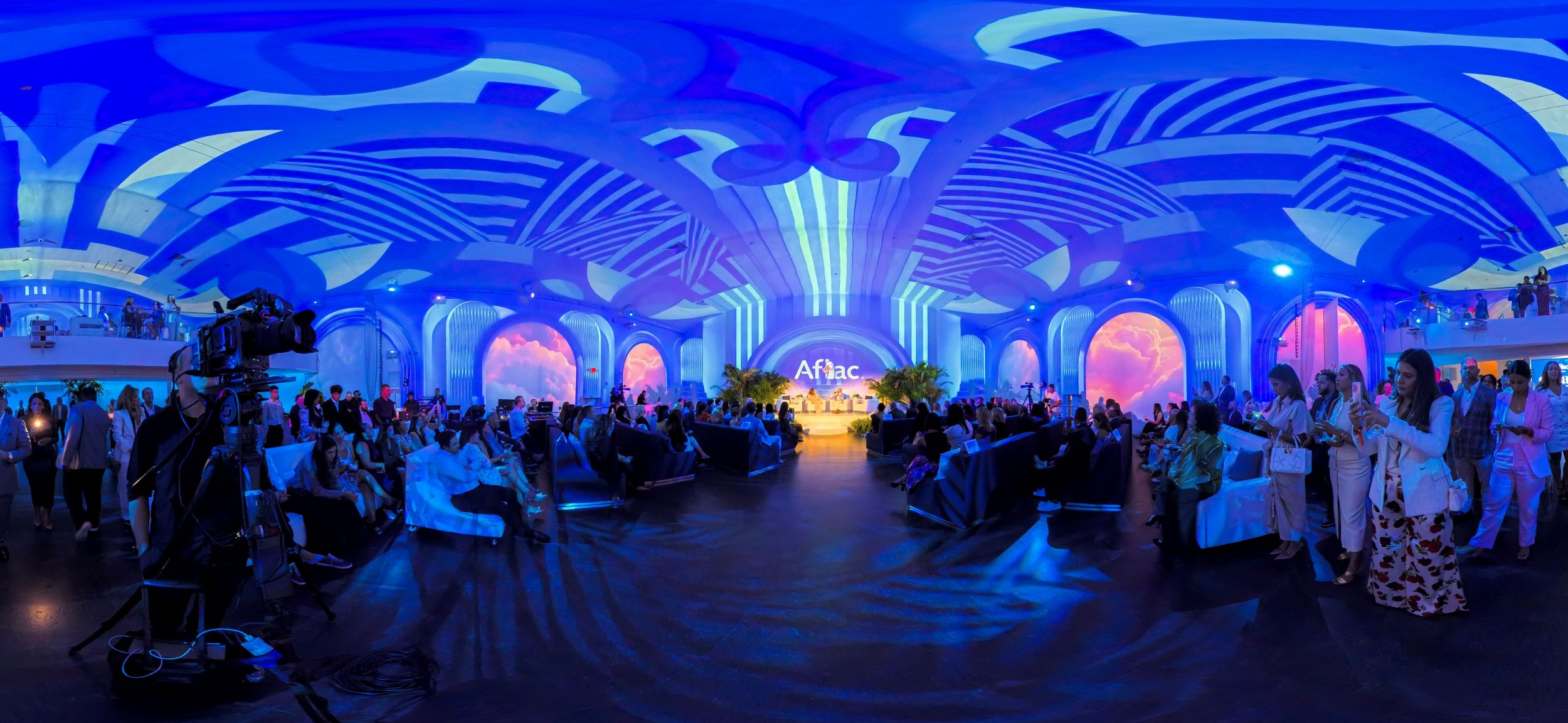
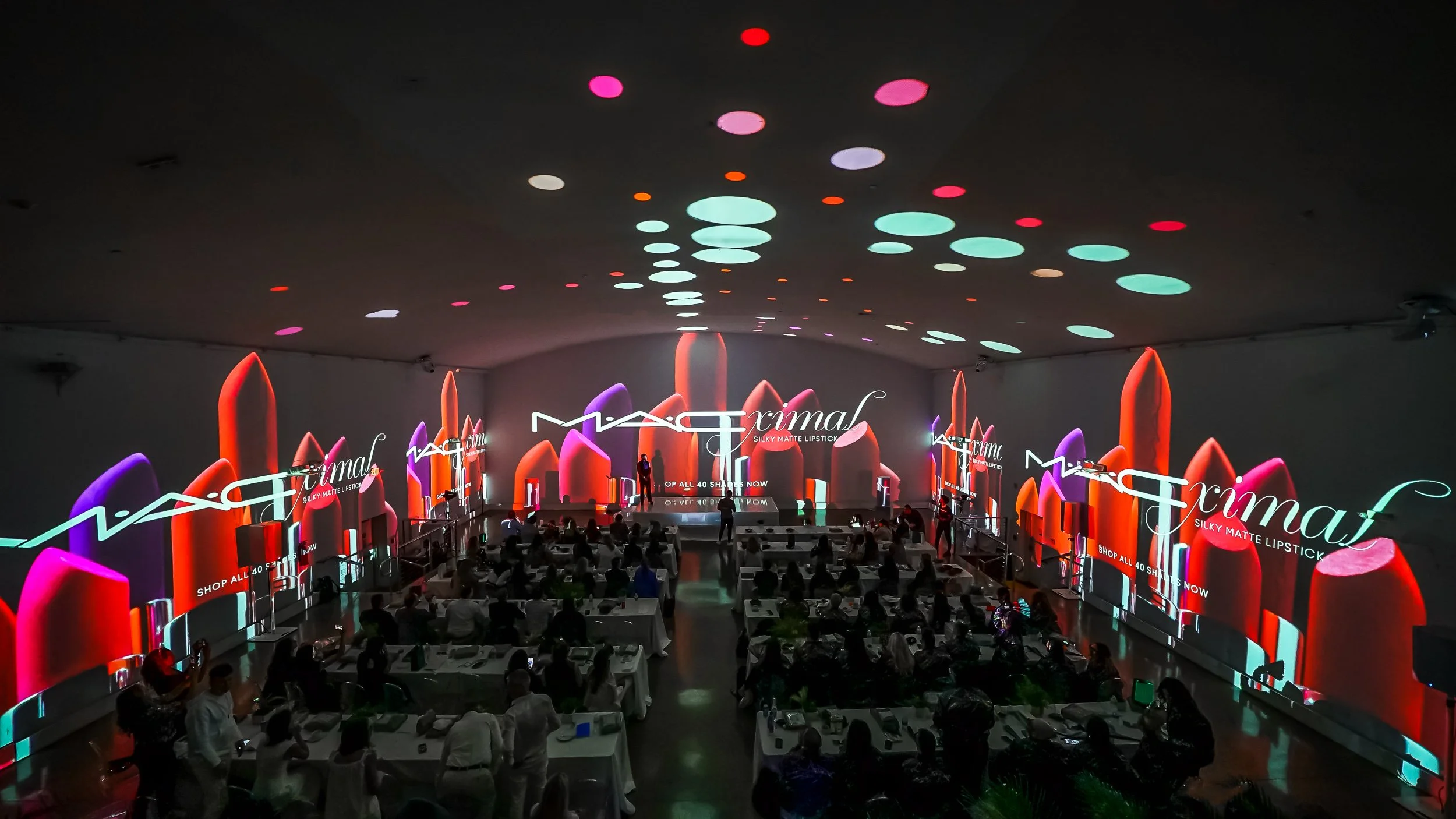
What’s the best approach to projection mapping for corporate events? In our experience, it’s simple: the system has to be part of the venue, not trucked in for one night. That’s exactly how we built The Temple House, with a permanent 360 degree projection mapping system integrated into our own production team, so your product launch, executive summit, or brand activation becomes part of the room instead of just happening inside it.
Most corporate events ask guests to watch. We’d rather give them something to experience.
Why We Think Projection Mapping Is Changing Corporate Events
Your audience has seen plenty of keynote stages, presentation screens, and polished conference rooms. Standing out takes more than another well designed slide deck.
We use projection mapping to change the relationship between the audience and the room. Instead of pointing every eye toward one screen, we can turn the entire environment into a moving visual experience.
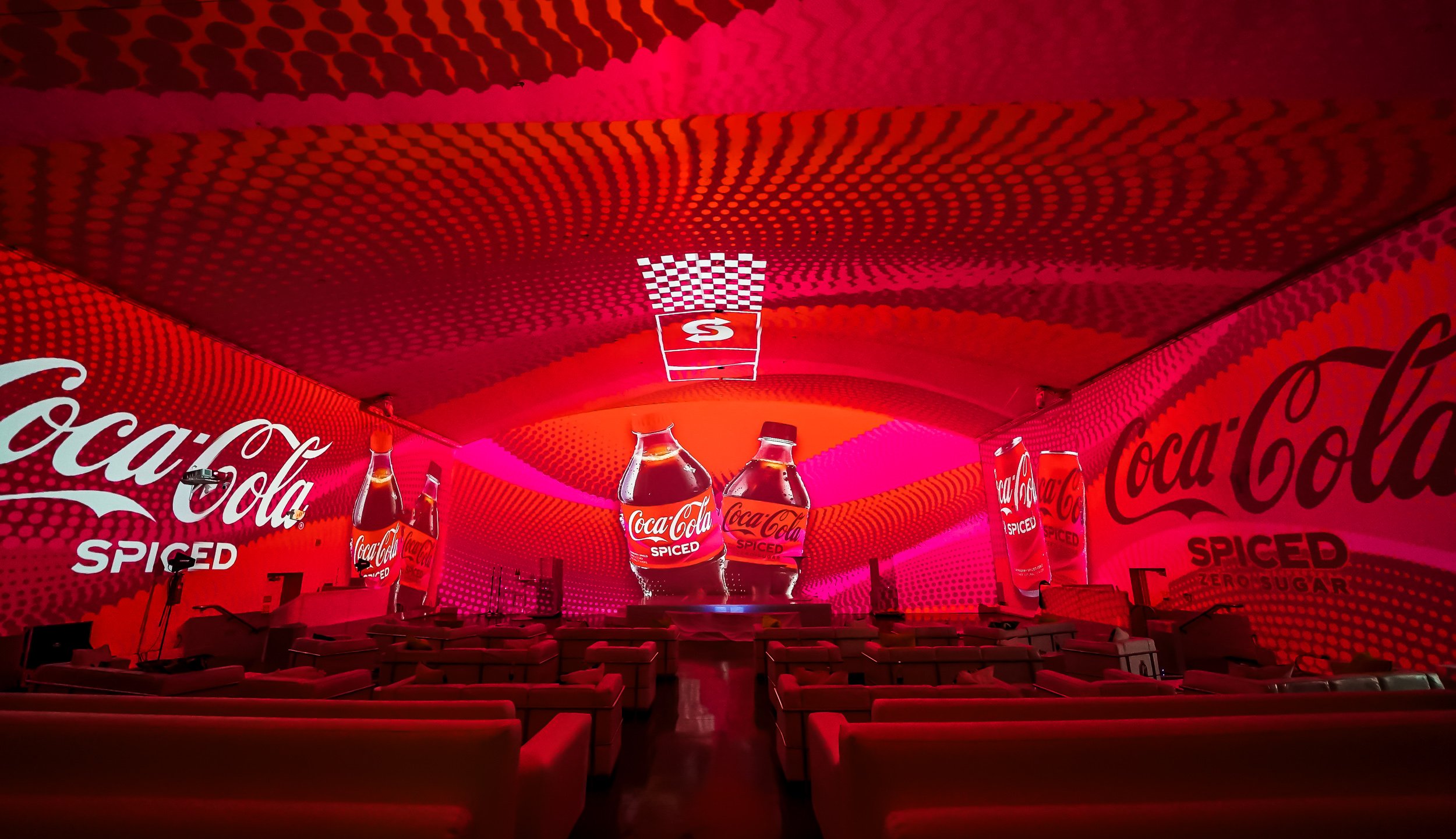
Picture a product launch where the room comes alive before the reveal. Company milestones move across the walls. The visuals shift. The architecture transforms. Then, at exactly the right moment, we bring the product to center stage.
Your guests aren’t just watching a presentation. They’re inside the story, and that’s the distinction that turns another line on the corporate calendar into something people actually talk about afterward.

What Projection Mapping Actually Is
Projection mapping is a technology that uses projectors to display custom digital content across architectural surfaces rather than a single screen. We design the visual content specifically for your event, then map animations and graphics onto walls, ceilings, stages, columns, and whatever other features the room offers.
Flat surfaces can carry dynamic visuals, while our 3D projection work can make architectural elements appear to move, shift, or transform entirely.
The technology itself is impressive. What we build with it matters more. We’ve designed visual chapters to reinforce a leadership summit’s themes, brought company milestones to life before an investor meeting moved into financial performance, and built anticipation around a product’s design and story before a launch. When the visuals carry a purpose, projection mapping stops being entertainment and becomes a communication tool.
How We Build It, From Concept to Cue
What your guests experience as effortless takes real work behind it. We start with your event’s objective, your audience, the venue, and the creative direction. From there, our designers build custom content around the architecture and program the visuals so they align precisely with the space. For larger productions, we run multiple projectors together as one continuous display.
Then comes testing and rehearsal. We calibrate every projector, align every visual, and synchronize audio, lighting, video, and cues. Our production team runs through the full experience before a single guest walks through the door.
Guests shouldn’t have to think about what the technology is doing. They should simply feel that everything happened exactly when it was supposed to. At The Temple House, our permanent 360 degree projection mapping system gives us the chance to develop and refine experiential environments within the architecture itself, rather than treating projection as a temporary add-on. We back that up with integrated production, so we bring every technical piece together instead of leaving you to coordinate separate vendors.
Why We Believe Experiential Events Create Greater Business Impact
People don’t remember information simply because they saw it on a screen. They remember what made an impression.
Picture two executive summits communicating the same company strategy. One relies on slides and speeches. The other uses visuals, lighting, sound, and the surrounding environment to bring the company’s journey and future to life. The information is identical. The experience isn’t.
That’s where we see real business value in a full production. Projection mapping can strengthen engagement, build brand recall, create memorable moments around major announcements, and give attendees something they actually want to photograph and share. We come back to one question on every project: what should your guests remember when they leave? That answer should shape the production, not the other way around.
Corporate Events Where We See This Work Best
Projection mapping works across a wide range of corporate events at The Temple House. The best use cases aren’t always the biggest productions. They’re the ones where the environment reinforces what the event is actually trying to accomplish.
Product Launches. A product launch is the payoff for months or years of work, and we think the reveal should feel like one. We build anticipation before the product appears, using visuals to introduce its inspiration, design, or story, so the room itself becomes part of the reveal instead of the backdrop behind it.
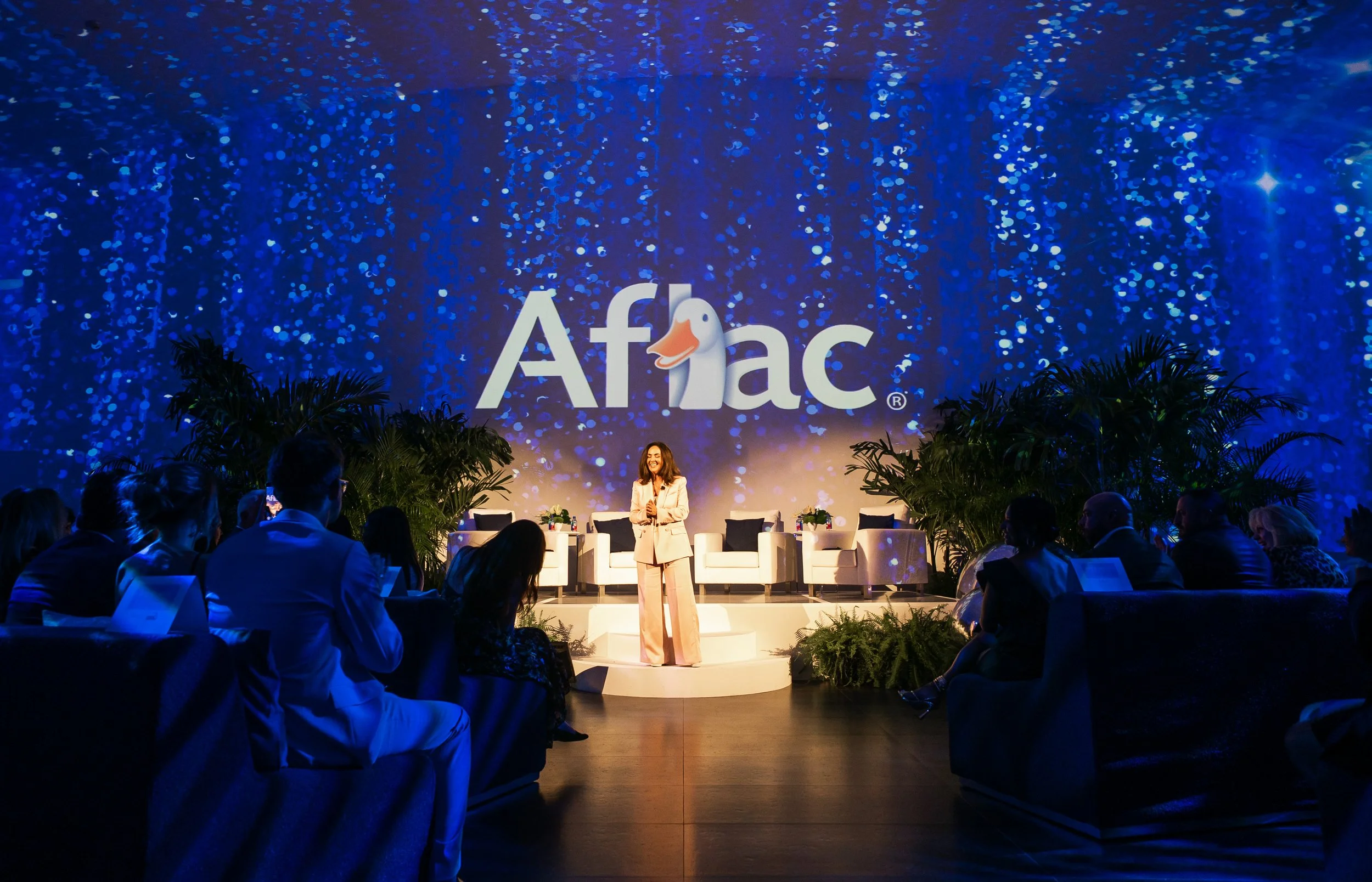
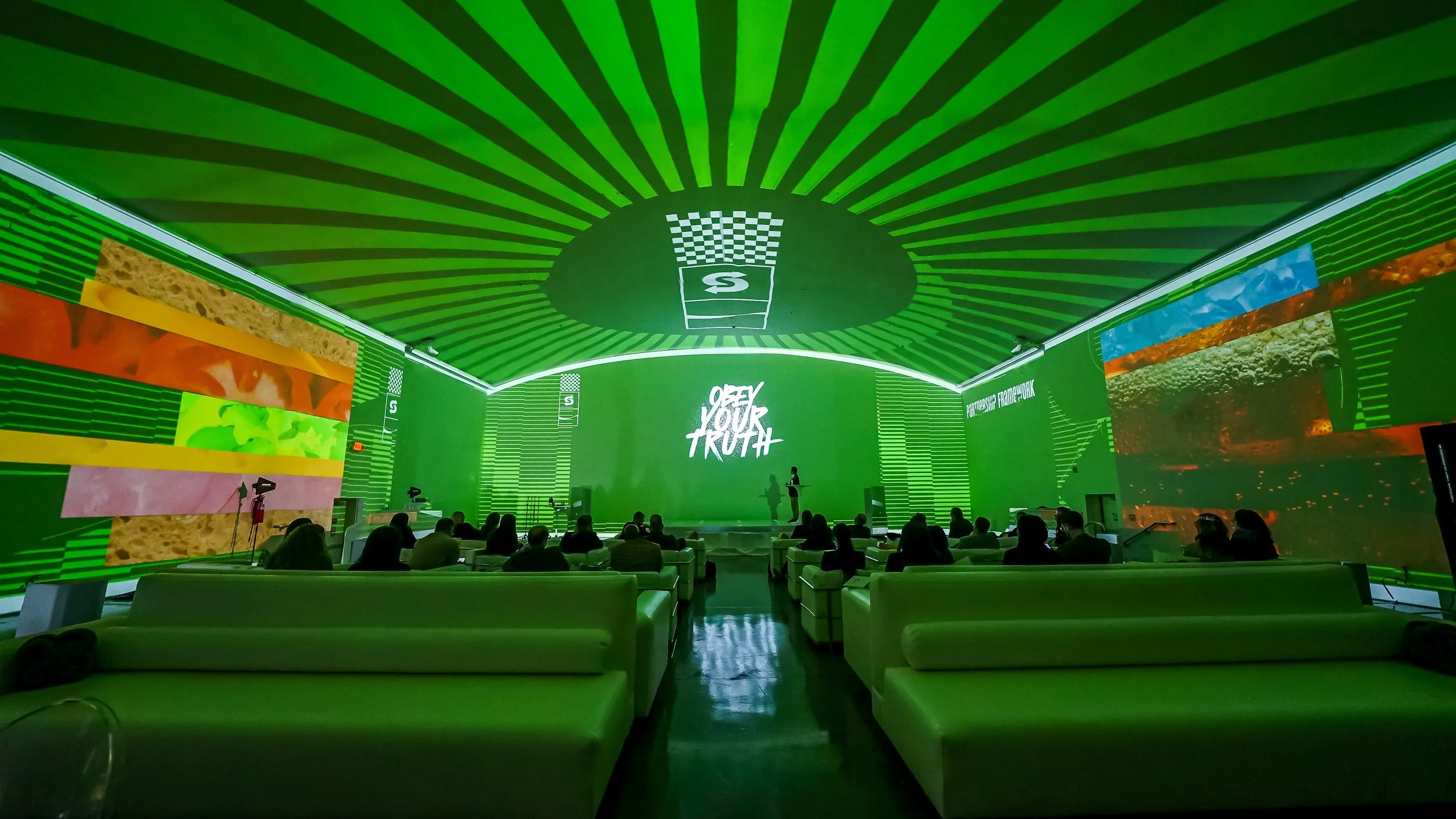
Executive Summits and Leadership Events. Leadership events are about alignment, communication, and momentum. We use visual chapters to support keynote sessions, create transitions between discussions, and shift the atmosphere as the day’s focus changes, all without the technology becoming the center of attention.
Investor Meetings. Investor meetings need clarity and confidence. We build a visual timeline of milestones, growth, and company history to set the bigger story before your executives move into financial performance, turning the presentation into a story about where the company has been and where it’s going.
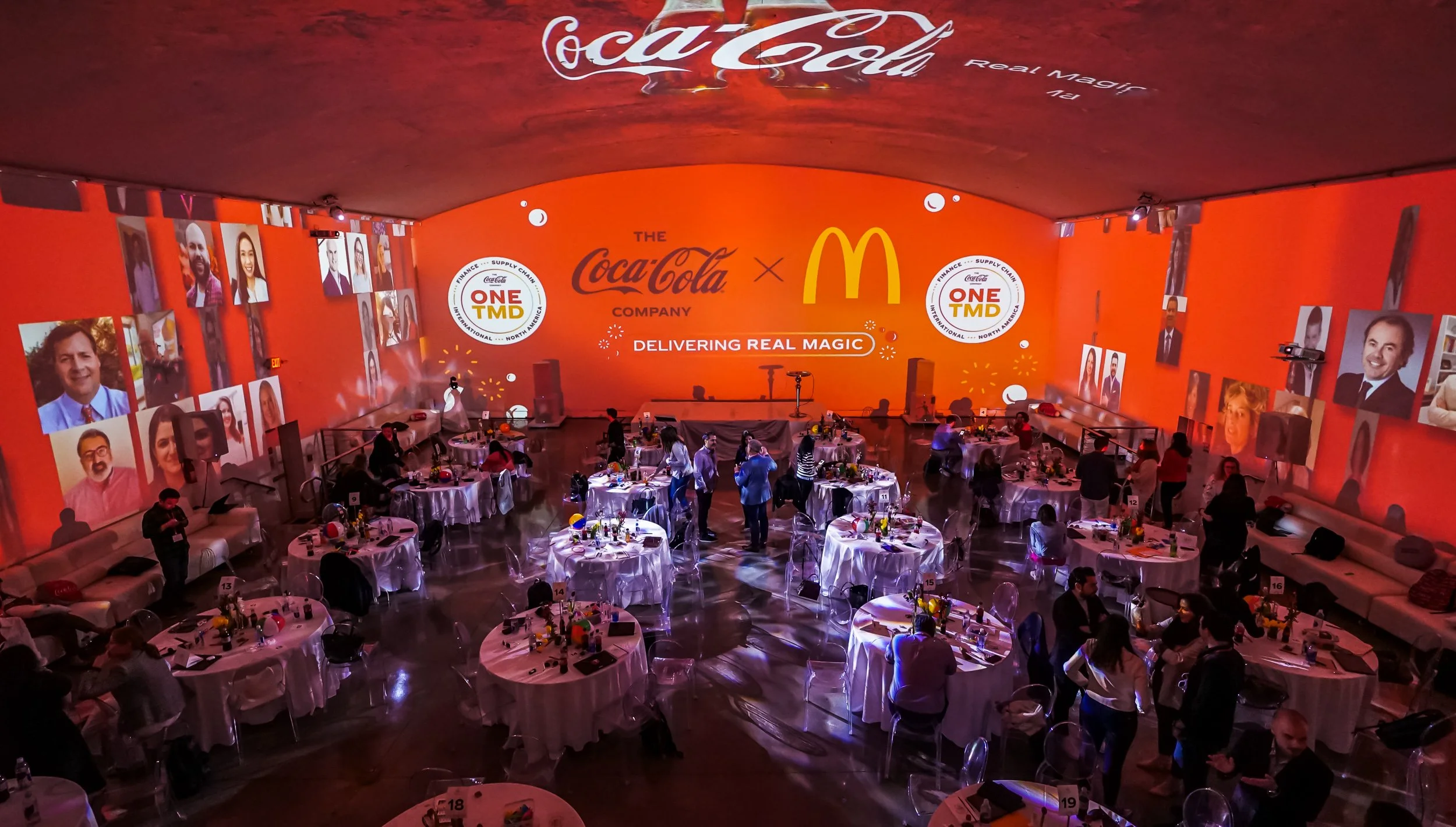
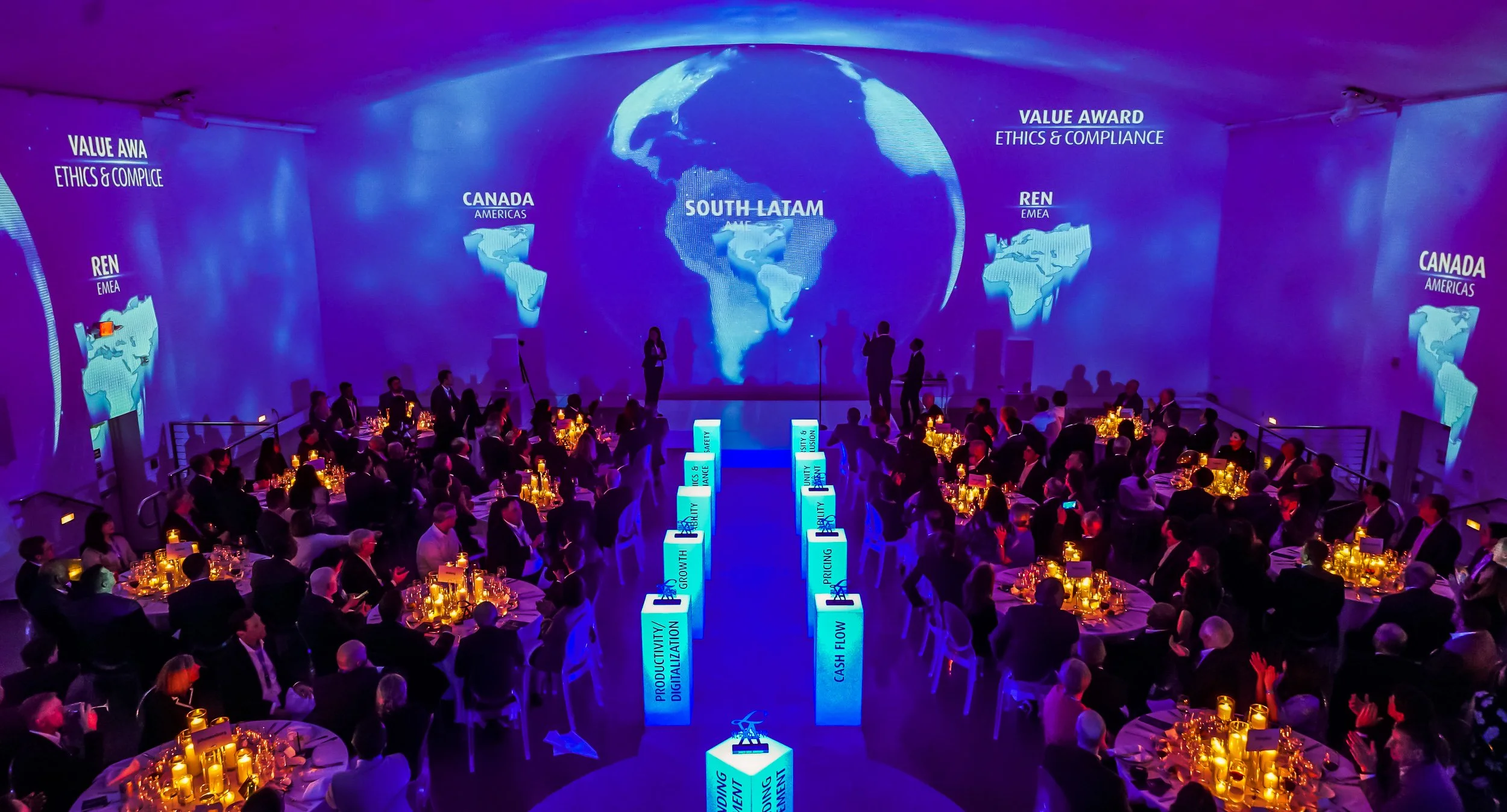
Awards Ceremonies and Company Celebrations. Recognition deserves a room that feels different from an ordinary workday. We create distinct visual chapters for award categories, milestones, and celebrations without a single physical decor change throughout the evening, so one room can feel different from one moment to the next while still telling one story.
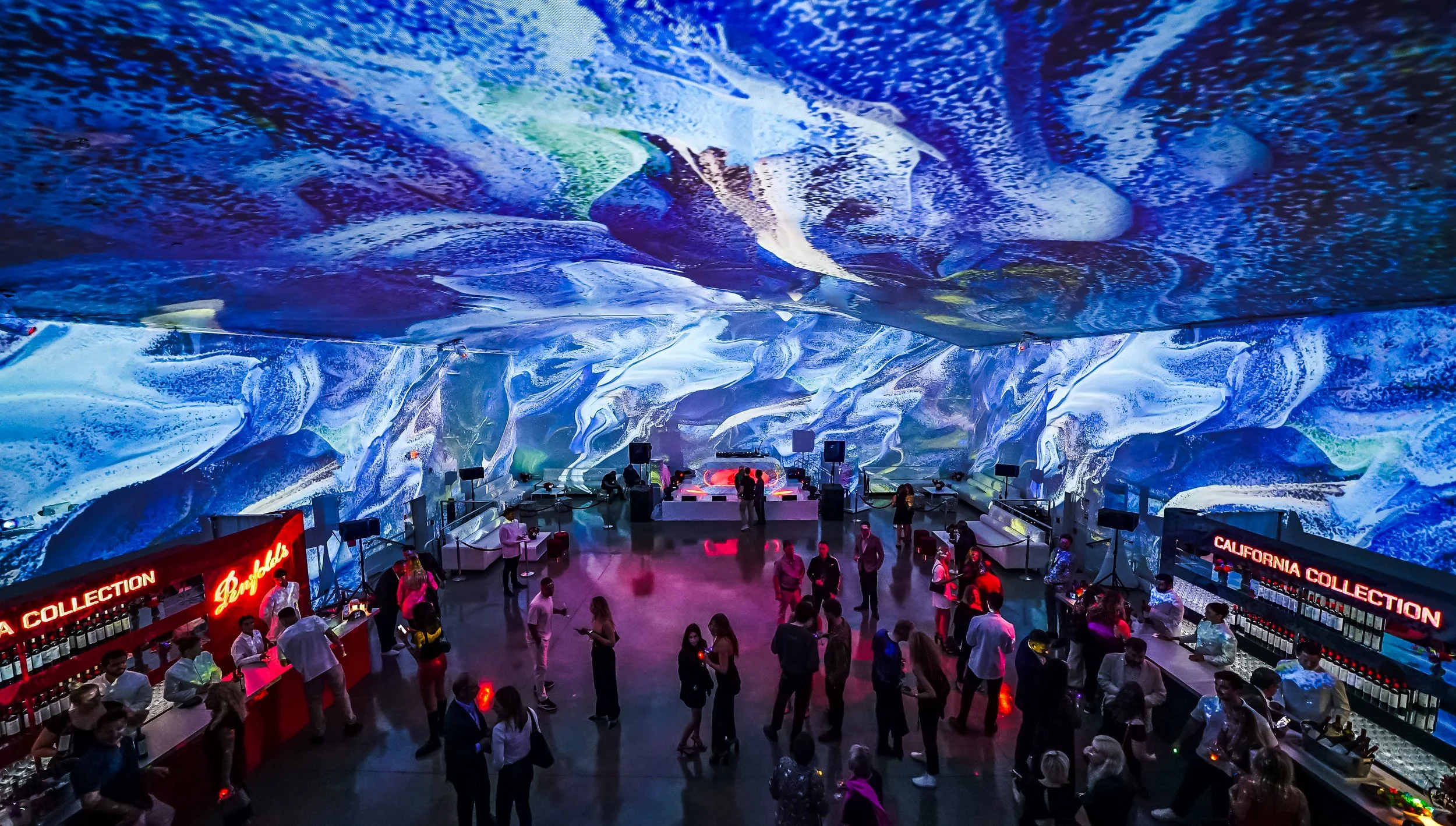
Brand Activations. Brand activations work best when people participate, which is the foundation of what we build as experiential brand experiences. We turn the venue into an extension of your campaign, surrounding guests with branded visuals and giving them moments they’re naturally inclined to photograph and share.
Projection Mapping vs. LED Walls: What We Recommend
One question comes up constantly. Should you choose projection mapping or an LED wall?
It depends on what you want the experience to accomplish. LED walls are excellent for keynote presentations, live video, speaker support, and high resolution content. Projection mapping serves a different purpose. It transforms the environment itself.
An LED wall shows your presentation well. Projection mapping can make the entire room part of the presentation. If you need a powerful presentation surface, we’ll often recommend an LED wall. If you want the architecture, walls, ceiling, and stage to become part of the story, projection mapping offers something an LED wall can’t. The two also work well together, one to communicate information and the other to build atmosphere, and we regularly combine both inside the same event.
Why We Built The Temple House Differently
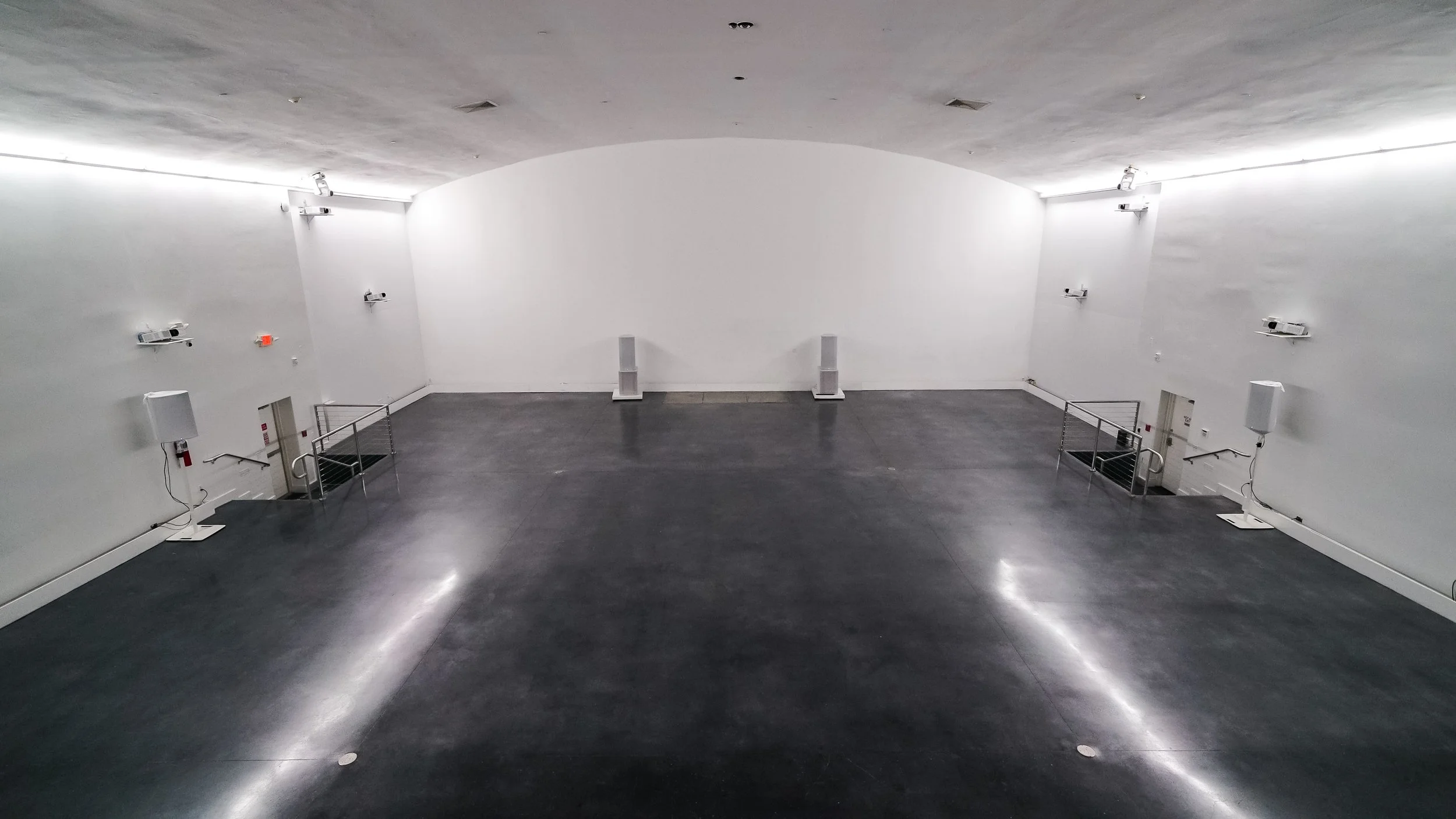
At The Temple House, we don’t bring projection mapping in for an event. It’s part of the venue.
Our permanent 360 degree projection mapping system works alongside our own AV production, lighting, creative direction, and technical team. That integration gives you more creative freedom while cutting the complexity that comes with coordinating multiple outside production companies.
We built the venue itself as a blank canvas. Instead of asking how your event fits into our room, we’d rather ask what the room could become for you.
Why We Start With Creative Direction, Not Technology
One of the easiest mistakes we see is starting with the visual effects. We always start with the story instead.
We think about every event as a series of chapters: arrival, opening, keynote, reveal, recognition, networking, celebration. Each moment should connect to the next instead of feeling like a pile of unrelated production cues. We use motion, lighting, music, and custom visuals to make those transitions feel natural.
When the creative direction is clear, the technology almost disappears, and that’s when we know it’s working. Our goal was never to make the room look different. It’s to make the experience feel different.
See how corporate events have changed recently Corporate Event Venues Have Changed. Has Yours?
How We Make the Complicated Look Effortless
Beautiful visuals are easy to notice. Making them feel effortless is harder.
Behind the scenes, our production team calibrates projectors, aligns visuals, manages lighting, programs transitions, synchronizes audio and video, rehearses every cue, and prepares technical backups. Guests shouldn’t notice any of that work. They should notice the reveal, the atmosphere, the moment everyone suddenly looks up.
What We’d Tell You to Ask Before Booking a Projection Mapping Venue
Choosing a projection mapping venue isn’t just about finding an attractive room. It’s about finding a space and team capable of supporting the entire experience. Before you book anywhere, we’d ask:
Is the projection system permanent or brought in temporarily? Who develops the visual content? Is production handled in house? How much rehearsal time do you actually get? Can the visuals be fully customized to your brand? What technical backup systems are in place? Will one team oversee everything from concept through execution?
These questions matter because projection mapping is only as strong as the environment and the production team supporting it.
Why We Believe an Integrated Production Team Matters
Separate vendors can handle lighting, AV, projection mapping, staging, and event management. We bring those disciplines together from the beginning instead.
That means fewer handoffs, clearer communication, and a smoother path from your original concept to the final cue. It also gives our creative and technical teams the chance to solve problems before they ever become problems on event day, and anyone who’s planned a major corporate event knows that fewer surprises are always a good thing.
Mistakes We See Often, and How We Help You Avoid Them
Even impressive technology can’t rescue an event without a clear strategy.
Starting too late. Projection mapping takes creative development, content production, programming, testing, and rehearsal. We ask for enough time to refine the experience rather than rushing decisions at the finish line.
Choosing effects over storytelling. A visual can be impressive and still be irrelevant. Before we approve a concept, we ask whether it actually helps tell your story. If it doesn’t, it probably doesn’t belong.
Choosing technology before defining the goal. We don’t start by asking what technology you can use. We start by asking what you need your audience to understand, feel, or remember, then choose the approach that supports that.
Choosing a venue without real production expertise. A venue can advertise projection mapping without having the creative or technical infrastructure to deliver it well. We’d tell you to look for purpose built technology, experienced production specialists, real rehearsal time, and a team that can manage the entire experience from concept through execution.
More Than an Event. An Experience Worth Remembering.
The most successful corporate events aren’t necessarily the ones with the biggest screens or the most elaborate technology. They’re the ones where the environment, the message, and the experience work together.
We use projection mapping to turn a venue into part of your story, build stronger moments around important announcements, and give your guests something worth remembering. At The Temple House, that starts with a blank canvas and an integrated team. Our permanent 360 degree projection mapping, creative direction, AV production, lighting, and event expertise give you the freedom to build around your objectives instead of fitting into a predetermined room.
So if you’re planning a product launch, executive summit, investor meeting, awards gala, or brand activation, we’ll start with one question. What do you want your guests to remember? Tell us what you’re planning, who you’re bringing together, and what you want the experience to accomplish, and let’s see what this room can become for you.
Frequently Asked Questions About Projection Mapping for Corporate Events
What is projection mapping for corporate events?
It’s a technology we use to project custom digital content onto architectural surfaces such as walls, ceilings, stages, and other features. Instead of placing your story on one screen, we make the entire venue part of the experience.
Is projection mapping better than LED walls?
Neither is automatically better. We use LED walls for presentations, live video, and speaker support, while we use projection mapping to transform the surrounding environment. Many of our productions use both together.
What should we look for in a projection mapping venue?
We’d tell you to look for purpose built technology, experienced production specialists, real creative direction, integrated AV and lighting, genuine rehearsal time, dedicated project management, and real experience running experiential corporate events. Most importantly, look for a team that understands why you’re using the technology, not just how.
Does projection mapping work for smaller corporate events?
Yes. We’ve built projection mapping experiences for executive dinners, investor meetings, leadership retreats, and intimate brand activations. The goal was never the biggest production. It’s the right experience for your audience.
Is The Temple House a corporate event venue in Miami with projection mapping built in?
Yes. Our 360 degree projection mapping system is permanent and built into the architecture itself, supported by our own in house production, lighting, and creative team rather than outside vendors.