Private Event Space vs. Banquet Hall For Weddings in Miami
The Wedding Planner's Guide to Choosing the Right Venue
You're sitting across from a couple who have spent a year imagining their wedding. They hand you two options. The first is a banquet hall with in-house packages, predictable pricing, and availability next month. The second is a private event space with a dedicated load-in window, 360-degree production capability, and a guaranteed one-event-at-a-time policy.
They ask which one they should book.
The answer depends entirely on the kind of wedding they actually want. But the question itself reveals one of the most consequential distinctions in event planning: not all venues are built for the same purpose, and the difference between a banquet hall and a true private event space runs deeper than square footage and price.
The Difference Starts Before the Event Does
A banquet hall is designed to run events at volume. Multiple gatherings can occupy the property simultaneously, in adjacent rooms or on rotating schedules throughout the day. The staff, the kitchen, and the infrastructure all support that operational model. It's efficient, often all-inclusive, and simple to book.
A private event space operates on a different premise entirely. The venue commits to one client, one event, and one setup. Every production decision, from room layout to lighting rig to catering service flow, serves that couple exclusively. Nothing competes for attention, access, or staff capacity on that day.
That structural difference shapes every other detail of the experience.
What a Banquet Hall Delivers Well
Banquet halls solve a real planning problem. They bundle catering, furniture, staffing, and sometimes decor into a single contract, which simplifies the vendor coordination process considerably. For couples whose primary goal is an elegant, well-managed celebration with an established catering operation, a well-run banquet hall delivers that reliably.
They also offer flexibility in the booking timeline. Many banquet halls hold dates well into the near-term calendar, which works well for couples with shorter planning windows or events under 150 guests. For budgets that prioritize value and convenience over production depth, a banquet hall represents a solid baseline.
The trade-off is predictability in both directions. What you see in the brochure is largely what you get. The space looks essentially the same for your wedding as it did for the event held the Saturday before.
What a Private Event Space Actually Offers
A private event space starts from a different question: what does this specific event need to become something genuinely extraordinary?
Full production capability gives planners real creative control over lighting design, AV infrastructure, decor installation, and staging. There's no room turnover schedule working against the setup. Load-in windows open earlier and hold longer, which matters enormously when a production team needs time to rig specialty lighting, calibrate a projection system, or install a custom floral installation from floor to ceiling.
For events where every detail serves the couple's vision, that operational flexibility isn't a luxury. It's what makes the difference between a beautiful wedding and an unforgettable one.
Five Differences That Change Everything
Exclusivity
A banquet hall rarely guarantees the property to one client. Other events may share common areas, parking, and staff. A private event space guarantees that no other celebration occupies the venue. Guests arrive to a space that exists entirely for one occasion.
Production Infrastructure
Banquet halls typically offer fixed AV packages: screens, standard speakers, basic uplighting. A private event space with dedicated production capability supports far more. Built-in rigging points, multiple projection zones, surround sound, and programmed lighting sequences require infrastructure that most banquet facilities aren't engineered to carry.
Catering Flexibility
Most banquet halls operate a required in-house catering arrangement with set menu tiers and F&B minimums tied to the room rental. Private event spaces with in-house culinary programs allow fully custom menu development, producing a food and beverage experience designed around the event rather than selected from a predetermined package.
Load-In and Room Turnover
This is where planners feel the difference most directly. A back-to-back booking schedule compresses load-in to a narrow window. Custom floral installations, specialty production elements, and complex staging setups become logistically difficult or functionally impossible. A venue dedicated to one event gives the production team the access and time to build something that actually reflects the brief.
Architecture and Atmosphere
A banquet hall is typically designed as a neutral interior, which sounds flexible but often reads as generic. Private event spaces housed in architecturally significant buildings bring a built-in character that no decor budget can replicate. That character becomes part of the event experience rather than just a backdrop for it.
The Planner's Venue Evaluation Checklist
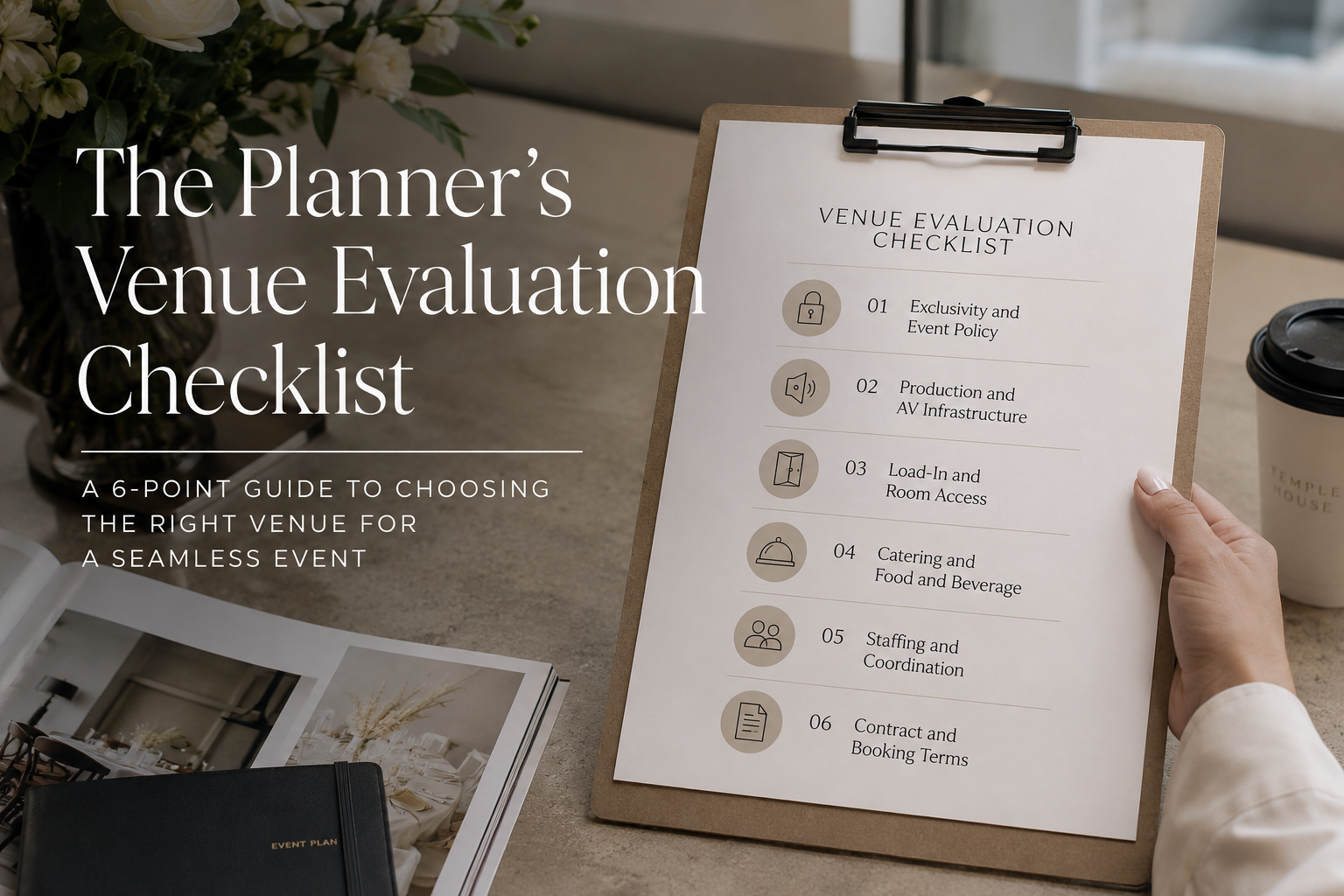
The five differences above tell you what to look for. This checklist tells you how to confirm it. Use these questions with any venue you're comparing before a contract touches your desk.
✅ Exclusivity and Event Policy
Does the venue guarantee no concurrent events on your booking date? Does the buyout cover the full property, including parking, arrival areas, and exterior spaces? Will the venue put the exclusivity guarantee in writing as a contract clause?
✅ Production and AV Infrastructure
Does the venue have built-in rigging points for specialty lighting and production installs? What is the projection system's coverage, and does it extend to walls, ceiling, or both? Does the in-house audio system support surround sound configuration for the full room? Can the production team access the space independently to rig and calibrate before setup begins?
✅ Load-In and Room Access
What is the earliest available load-in time on the event date? Does a room turnover from a prior event restrict the load-in window? How many load-in access points are available, and can they accommodate large equipment? What is the contracted breakdown time after the event ends?
✅ Catering and Food and Beverage
Is the catering program in-house, required-vendor, or open to preferred vendors? What are the F&B minimums for the specific room configuration and guest count? Does the kitchen operate as a full commercial kitchen, or does food arrive from an off-site facility? Is a menu tasting included in the planning process before the contract is finalized?
Staffing and Coordination
Does the venue assign one dedicated event coordinator for the full planning period? How many staff members work exclusively on your event on the day itself? What is the venue's staff-to-guest ratio during food and beverage service?
✅ Contract and Booking Terms
What are the cancellation and postponement terms, and how do they handle force majeure? Is the F&B minimum fixed, or can it adjust based on menu changes and final guest count? What is the deposit structure, and when is the balance due?
The answers to these questions will tell you more about a venue than a site visit. A private event space designed for production-level events will answer every one of them without hesitation. A venue that hedges on exclusivity, compresses load-in, or locks you into a fixed catering package is showing you its operational model before you sign anything.
What This Looks Like in Miami Beach
Miami Beach sits within one of the country's most celebrated Art Deco Historic Districts, a neighborhood recognized for the architectural significance of its built environment. The venues here don't feel interchangeable because they aren't.
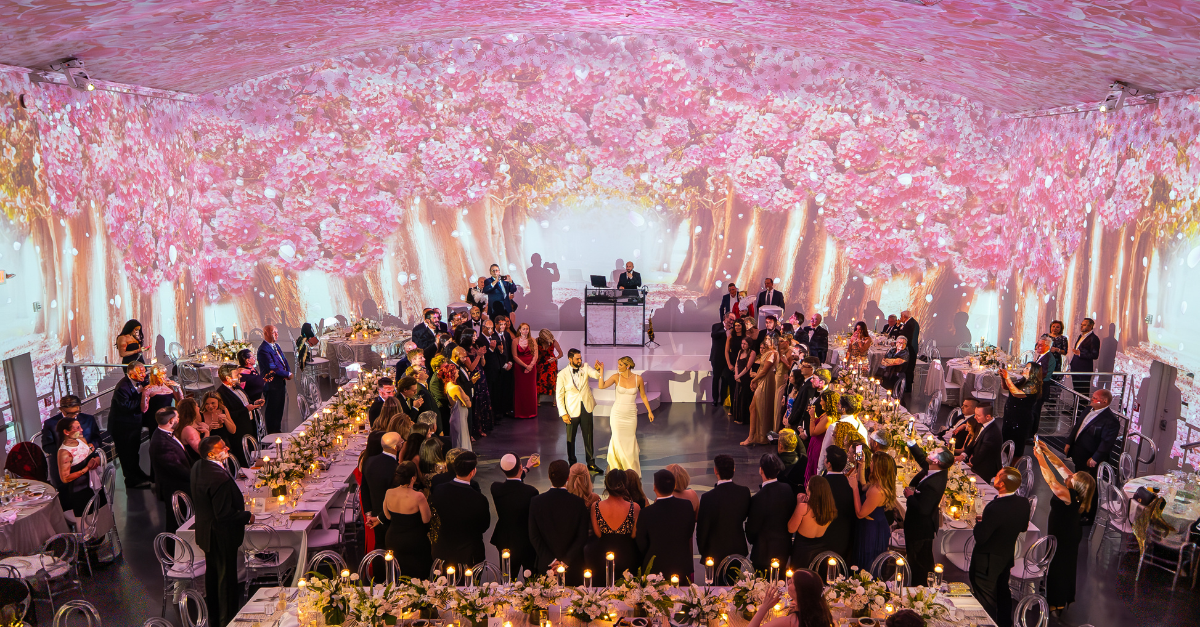
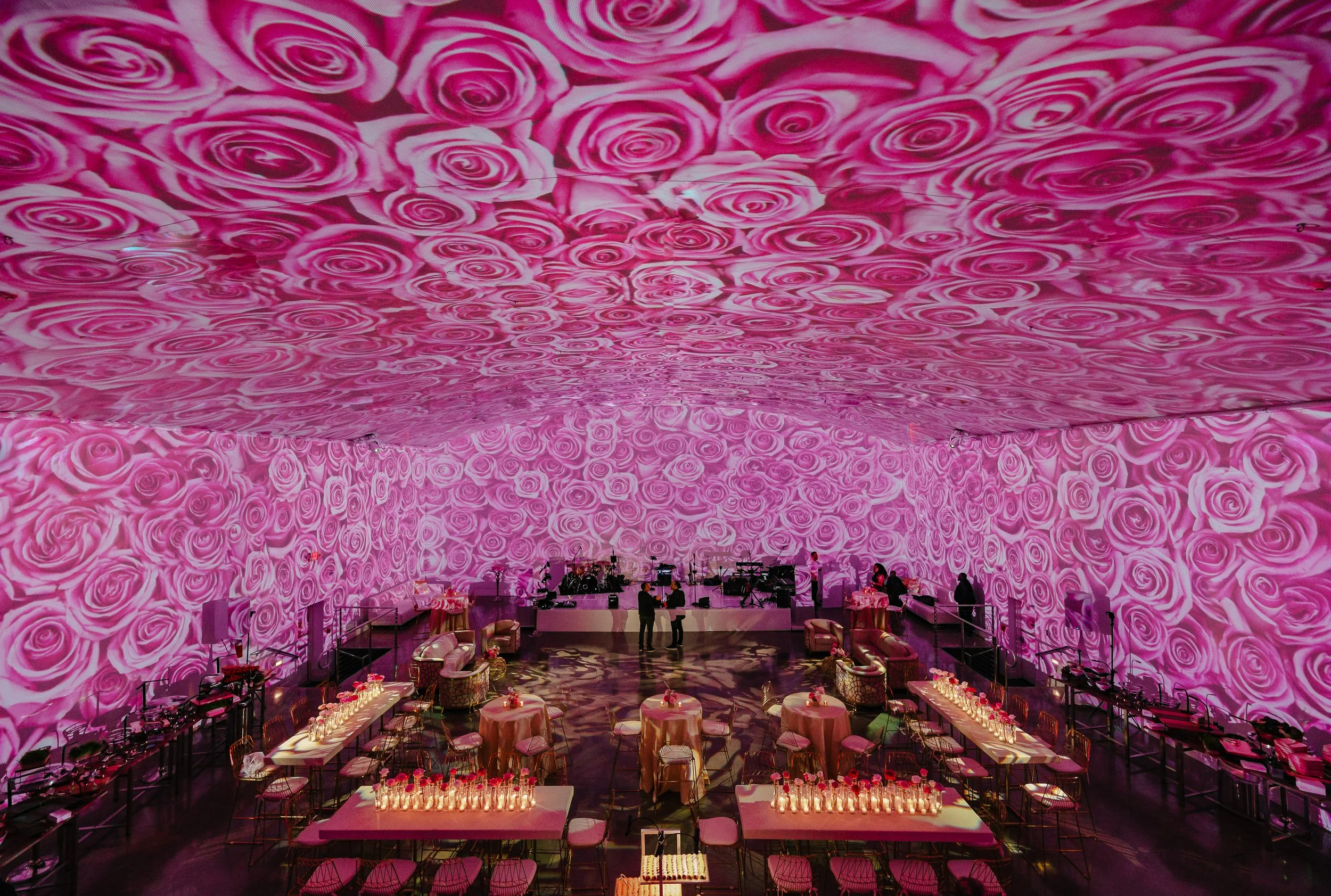
The Temple House operates as a private event space on the one-event-at-a-time model. The grand room rises to 25-foot ceilings and accommodates up to 500 guests. A built-in 360-degree projection mapping system covers walls and ceiling, transforming the visual environment of the space completely for each event.
Couples who have held their weddings at The Temple House have produced experiences no banquet hall setting could replicate. One wedding covered the ceiling and walls in a full cherry blossom canopy in bloom. Another set the room alive with projected fireworks during the ceremony reveal. A third turned the space into a cathedral of light built from the couple's personal story, incorporating custom visual elements designed exclusively for their reception. These aren't decorative add-ons. They're productions built on infrastructure and exclusivity that require a dedicated private venue to execute.
The full-service model includes in-house catering from a commercial kitchen, planning and production coordination, and a dedicated team from contract through final breakdown. There's no friction between a venue that rents the room and a caterer who has never worked the space.
Choosing Between the Two
Both serve real purposes. A banquet hall is the right choice for couples who want a well-managed, turnkey experience with predictable execution and a shorter planning runway. It delivers on those terms consistently.
A private event space is the right choice for couples who want their wedding to be something their guests have never experienced before. The production depth, the exclusivity, the architectural setting, and the creative freedom are what planners reach for when the brief says the event needs to be genuinely unforgettable.
Miami gives you strong options at both ends of the spectrum. The question is always what the couple actually needs their day to be.
Frequently Asked Questions About Private Event Spaces vs. Banquet Halls
What is the main difference between a private event space and a banquet hall? A private event space dedicates the entire venue exclusively to one event at a time. A banquet hall typically accommodates multiple events simultaneously in adjacent rooms or on rotating schedules. That exclusivity shapes everything from staffing attention to production capability to the overall atmosphere guests experience.
Is a banquet hall a good choice for a wedding reception? A banquet hall works well for couples seeking an all-inclusive, turnkey experience with an established catering operation and a reliable baseline presentation. For couples who want full creative control, custom production design, or an architecturally distinctive setting, a private event space typically delivers a more distinctive result.
Why is a private event space better for weddings with large productions? Private venues allow extended load-in windows, full production access, and custom AV infrastructure. Banquet halls operating on back-to-back schedules compress load-in time significantly, which limits what a production team can install, rig, and calibrate before guests arrive.
What does one event at a time mean at a private venue? It means the venue commits the entire property, staff, and team to one celebration. No other events share the space, the parking, or the attention of the venue team on your wedding day. Every member of the staff on-site that day is there for one purpose.
How do F&B minimums work at a private event space versus a banquet hall? Banquet halls typically require meeting a set F&B minimum tied to room rental, with menus chosen from established package tiers. Private event spaces with in-house catering programs offer fully custom menu development, with food and beverage pricing structured around the event rather than a predetermined package.
What should planners ask when comparing a private event space and a banquet hall? Ask about concurrent event policies, load-in window length, whether in-house AV infrastructure supports custom production, catering exclusivity terms, and room turnover schedules. Those answers reveal the operational model more accurately than any brochure.
Are private event spaces more expensive than banquet halls? The investment at a private event space is typically higher, reflecting the exclusivity model, production infrastructure, and dedicated staffing. Couples comparing all-in costs carefully will find that banquet halls with separate vendor contracts for catering, AV, lighting, and decor often reach similar totals without the production depth.
What makes Miami Beach a distinctive location for a private wedding venue? Miami Beach's Art Deco Historic District gives the city's most significant venues an architectural character that can't be reproduced elsewhere. Venues in this district hold designation specifically because of their design significance, and that character becomes part of the wedding experience rather than simply a backdrop for it.
Want to Learn More About Private Event Spaces in Miami?
A private event space is a category that covers a range of venues, from intimate rooms for 50 guests to full-scale production environments for 500. The term describes an operational model, not a size. Understanding what private actually means in a venue contract, including exclusivity clauses, concurrent event policies, and dedicated staffing arrangements, helps planners and couples make a well-informed comparison before committing to a date.
For couples exploring luxury wedding venues in Miami, the weddings page at The Temple House covers the full range of what the private event model makes possible, from custom ceremony design to full production planning. [INTERNAL LINK: thetemplehouse.com/weddings]
The best dates at The Temple House are booking now. A limited number of prime dates remain available, and next year is open for couples ready to plan ahead. Submit your wedding inquiry at thetemplehouse.com/weddings or call (305) 673-2526 to speak with the event team directly.